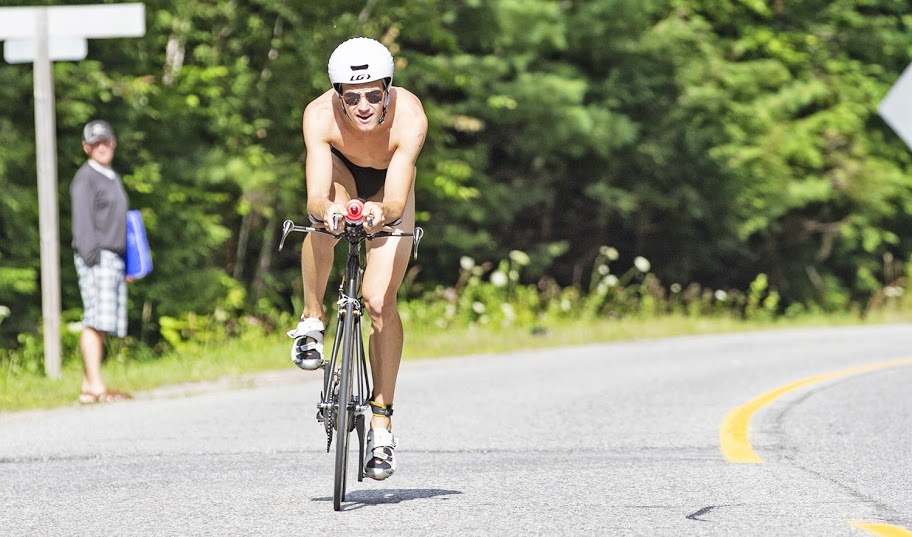
A couple of years ago, when I was
just starting out with triathlon, I was at a loss for what gear I needed to
have to compete in this sport. I started out riding with D'ornellas
cycling club, and saw triathletes with high end, aerodynamic, electronic shifting
tri bikes. My running shoes were a pair of old
Adidas
Bounce that was worn completely through the heel, and I started out
swimming in board shorts and crappy goggles.
Fortunately, my gear choices
have improved since then, but not because I spent a lot of money, but
rather because I got good advice on what to look for. I currently talk
with a lot of people who are just starting triathlon and don't know really what
to buy or how much they should spend. As the triathlon season quickly
approaches, everyone is starting to buy their summer gear, so here is my go to
list on what you need for your first triathlon.
Before I get to the list, here is
how I will split it up. First I will highlight the products that I
believe are necessary, and an approximate range on how much you
should spend (DIY methods may also be touched upon). Next I will outline
products that would be beneficial as you continue in triathlon, but
may be a bit much off the start (optional items). Yes it is a long blog
post, but if you are even slightly interested in triathlon, hopefully you won't
doze off...
Necessary Items
Swim
The swim is the first part of the
race, and also the part where most beginner triathletes feel the least
comfortable. Here are some options for a good swim.
Goggles: Having
comfortable goggles that don't leak or fog is of utmost importance for open
water swimming. If you can't see where you are going (can't sight the
buoys), then you will probably end up swimming the wrong way
and becoming disoriented (like my friend Raffi who swam around the
first buoy twice). Find a pair that fits your face and doesn't leak, and
you should be fine. To avoid the fog, the only way to do it is the spit
and rinse technique (its really not that gross). Costs for goggles vary,
but on average, you can get a good pair for around $20.
Wetsuit: This
piece of kit is pretty important for open water swimming, but is also one of
those things that can become expensive. Wetsuits will help keep you warm,
help you swim better (if you are not a very strong swimmer), and will help you
float in the water (help you feel more comfortable in the water).
Nearly everyone in a triathlon is wearing a wetsuit (yes everyone looks
weird in one, so you won't be alone).
If you are just a beginner however, I would only recommend renting a
wetsuit from a specialty shop. This saves you the cost of a potentially
$400 wetsuit, and offers a good race day upgrade to your swimming. Expect
to spend around $40 to rent the suit for the weekend.
Bike
The bike is the middle discipline
in the triathlon, and tends to take the longest amount of time to complete, and
also the most money. A bike is the biggest purchase you will have to
make, so here are some tips.
Get a road bike: This is the most versatile option you can purchase, and is
the most well suited for beginner triathletes. Road bikes are more
comfortable than triathlon specific bikes, and can be found for pretty good prices.
I would recommend a simple aluminum frame road bike costing no more than
$800 (my first bike was a 1970's steel frame Raleigh, so really anything
is faster than that). If you want a carbon road bike, you’re looking at
2k, and if you are just starting out, you probably wouldn't even notice the
difference.
Aerobars: If
you listened to the first piece of advice and got the road bike, then
you can transform it into a "tri bike" with the simple addition of
clip on aero bars. These go for under $100, and are
a noticeable aerodynamic upgrade to basic road position.
If you are not anticipating averaging speeds over 30km/h
however, then this may not be a beneficial upgrade for you. The
riding position these put you in is also not the most ergonomic, and
may lead to some back and neck pain. The aero position is also
more difficult to control (Roadies also tend to make fun of you when you have
them on a group ride).
Repair kit: There
is nothing worse than getting a flat tire in a race, especially if you are just
starting out. If you are unfortunate enough to have this happen to you,
you can ensure you are prepared by carrying a spare tire, tire levers, and a
pump (or co2) in a seat bag or frame bag. I haven't had a flat in a race
yet, but I have in training, and it sucks being stuck with a flat if you don't
have a spare. And yes, you will have to change it yourself, so maybe
practice a few times. $40
Run
This is the last part of the
race, and is the discipline where you will feel the most fatigue.
Here are some recommendations for having a comfortable run.
Shoes:
This is one piece of kit that you won't want to cheap out on. Having a
good pair of running shoes for training and racing will help you run better,
more comfortably, and will reduce the likelihood of injuries.
If you have not purchased a pair of running specific shoes before, head
to a specialty running shop (cough...Running Free...cough), and have a knowledgeable
staff member who may also be a good looking triathlete (cough...Andrew...cough)
help you find a shoe. Be prepared to fork over some clams for a good pair
of shoes, probably in the $100-$150 range, but it will be worth it.
Laces:
If you do happen to have a handsome triathlete salesman named Andrew, he may
also recommend purchasing elastic laces for your new shoes. Elastic laces
don't have to be tied, and will save you bending over in
the transition area with shaking hands to tie your shoes. If
you feel you may become frustrated with having to tie your shoes, these are the
product for you. A DIY alternative is to purchase elastic cord from
Fabric Land, and use a cord lock. Expect the store model to run about
$10, and the Fabric Land version to go for about $2 (no I wouldn't mention the Fabric Land idea if I was selling you shoes in the store).
General
Here are some other items that
may be helpful.
Tri-belt:
This will hold your race number and save you having to safety pin it to your
shirt. If you aren't planning on wearing a shirt in the swim, it will
allow you to put it on under your wetsuit, or put it on
in transition after the swim. $10.
Sunnies: A
good pair of sunglasses is important, as a lot of cheaper non-sport, sunglasses
will have crappy lenses that may shatter. Unless you want to risk pulling
glass out of your eyes, get a decent pair.
$40-$50 for lower end
(recommended), $100-$250 for high end (probably not necessary...bad experiences
with Oakley's)
Hat or Visor:
Some people like to wear these, as it will shield your face from the sun, and
make the run more comfortable. A hat will also retain water if you dump
it on your head at a water station, which will help keep you cool. Turn
it backwards if you want to look like a pro. $10-$15
Towel: For the transition area to lie
out your run and bike gear on, and also to dry off your feet. They sell
special transition mats for like $40, but you only need a basic
cotton towel (bonus points if it's pink). $5
Sunscreen: You
need waterproof sunscreen for triathlon. Since you start out in the
water, a non-waterproof product would just wash off and you would get burned on
the bike/run. $15-20 (this stuff's expensive)
Glide: Products
like body-glide help prevent your wetsuit from sticking to your skin
(easier to put on/take off), and will also prevent chaffing on the skin (like bloody
nipples-those hurt and bleed pretty good). $5-$15
Gel/Salt: If you are doing anything longer that a
sprint distance triathlon, you may want to consider an energy gel product to
supply you with some simple carbohydrate energy (help prevent
bonking). If you sweat a lot, you may want to take in something with
electrolytes as well (helps prevent cramping). Honestly though, don't go
crazy for nutrition stuff if you are doing Olympic distance and under. Gel
goes for about $1-$2
Optional
If you've made it this far in the
blog post without falling asleep, or getting distracted, congratulations, I
consider you a loyal and committed blog reader (the best kind).
If it makes you feel any better about spending the 5 minutes it took to
read the top part, keep in mind it took me like a whole hour and a half to
write.
Now here are some items for you
triathletes who are a bit more competitive, or have a bit more $$$.
Tri-suit: If you are just starting out, you can probably get away with
racing in a bathing suit for the whole race (and a t-shirt for the bike/run).
More advanced triathletes however require either a one or two-piece
triathlon specific suit. The one piece is tight fitting, sleeveless, and
has a small built in bike chamois that does not absorb any water (hard to pee
in though). The two-piece is tri shorts (same as in one piece but way
easier to pee in), and a "singlet" or sleeveless tight top. You
wear the tri-suit underneath your wetsuit in the swim, and you don't
have to change clothes in the transition area (always a pain). You could even just buy the tri shorts
and wear some kind of tight top if you didn't want to buy the singlet. 1
piece is $100-$175, 2 piece shorts $75, singlet $50.
Wetsuit:
If you have $$ to spend (not me), or are a poor but competitive racer (me),
then you get to buy the wetsuit instead of renting it. This is better
value if you race multiple times per year, as renting the wetsuit over and over
again gets expensive. You can also have the piece of mind that no one
else will have gone pee in your wetsuit. Look to spend $300 for a lower
end model, and $500+ for a good one. You could try finding a used one,
but be cautious, as the glue tends to dry out after 2 years, and you might have
a suit full of broken seams.
Bike: If
you are a committed triathlete and also have lots of $$, you can go
for the fancy triathlon bike. A tri bike with race wheels will probably
be upwards of 3-4k. These bikes are designed to be ridden solely in the
aero position, and will offer many aerodynamic advantages over road bikes.
These are nice bikes and do go fast, but unless you are averaging in the
high 30km/h range, all those aero features really aren't doing all that much
for you (except looking good). I always liked to pass people on my road bike
when they were riding their fancy tri bikes...
Tri-bike Shoes: As you may begin to see, it is way too easy to go overboard
with bike gear. This option is helpful, as the shoes are easy and fast to
put on due to the Velcro straps, but that’s about all...(small aero advantage
for those who are concerned). $150-$300
Aero helmet: If
you want to look like you know what your doing, or you really are going fast,
an aero helmet is much better than a traditional one in regards to
aerodynamics. Only purchase one of these if your serious (or again if you
have too much $$ sitting around). $200+
Hooray!!! You made it to
the end!!! All right, so honestly, that’s the bare bones of what you will need
for triathlon racing. There are way more things out there (trust me…WAY
MORE), but if you stick to the list, you should be fine. If you've made
it this far in the blog post, you either are really interested in triathlon
(hopefully the case) or have too much time (hopefully not the case.... but
thanks for reading anyway). Feel free to write down my list as a guide (I
always check it over before I leave for a race), or email me and I will send
you a hard copy.